 Cursive Writing
April 10, 2026
J. Anand, Calligrapher
4 min read
5 Essential Tips for Perfecting Cursive Writing
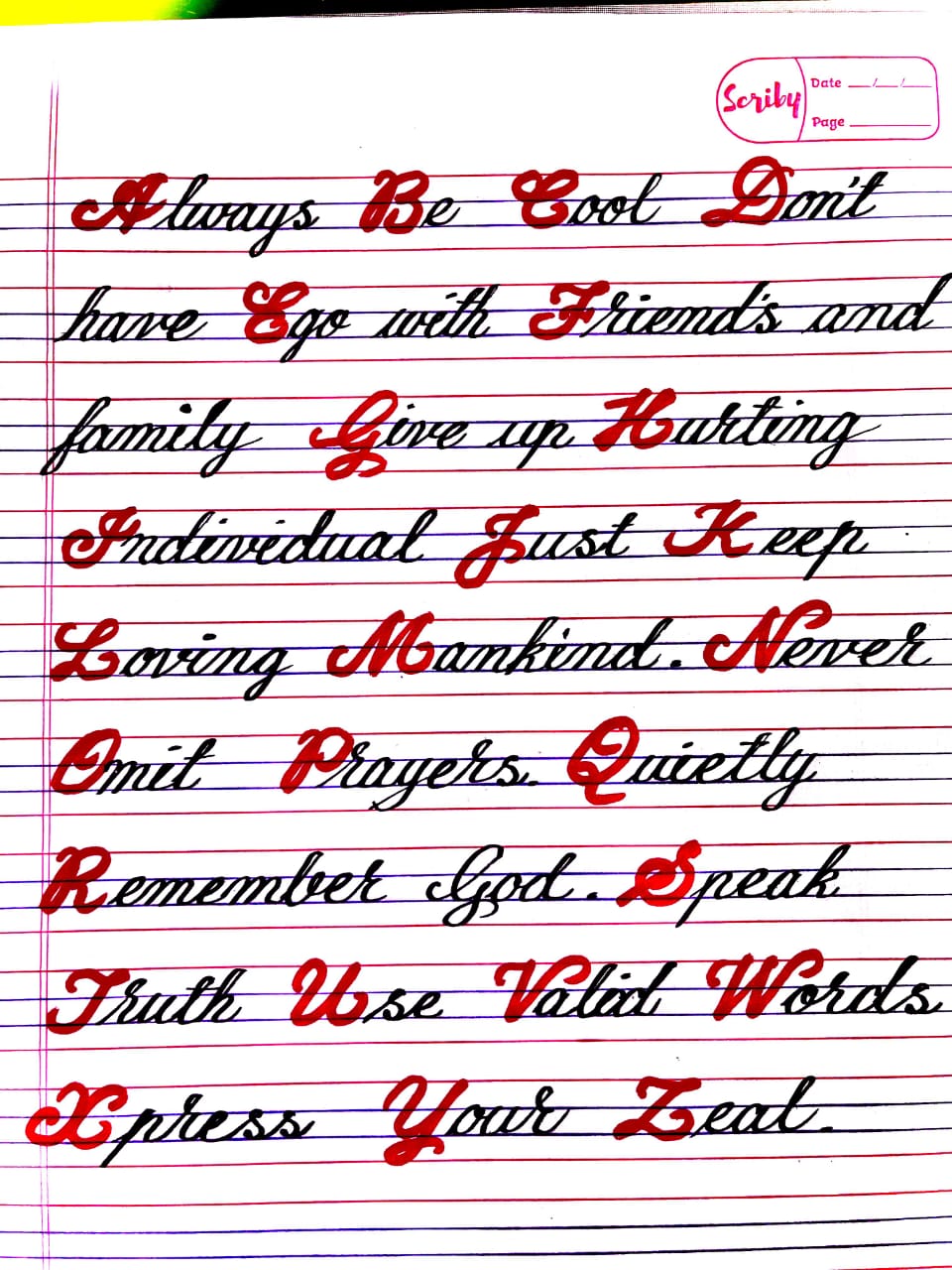
Cursive writing is one of the most elegant and practical handwriting styles — and one of the most rewarding to learn. Whether your child is just beginning or struggling with inconsistent letterforms, these five tips will make a dramatic difference.
1. Master the Basic Strokes First
Before attempting full letters, practice the foundational strokes: upstrokes, downstrokes, ovals, and loops. These are the building blocks of every cursive letter. Spend at least 10 minutes daily on stroke practice before moving to full letters.
2. Maintain Consistent Slant
Cursive writing looks best with a consistent right slant of about 15–20 degrees. Use slant guide sheets under your paper initially. Over time, the angle becomes second nature. Inconsistent slant is the most common flaw in beginner cursive.
3. Focus on Letter Spacing
Even beautiful individual letters can look messy if spacing is inconsistent. The gap between words should be about the width of a lowercase 'o'. Within words, letters should be connected smoothly without large gaps.
4. Use the Right Pen
For beginners, a medium-tip ballpoint or a fountain pen with smooth flow works best. Avoid gel pens that dry slowly — they smear cursive writing. At ABC Teach, we provide age-appropriate writing instruments in all our courses.
5. Practice Daily for 15 Minutes
Consistency beats intensity. 15 minutes of focused daily practice produces better results than 2 hours on weekends. Use lined paper with a mid-line guide to control letter height. Most ABC Teach students see visible improvement within 2–3 weeks!
Ready to improve your cursive writing with expert guidance?
Book a Free Demo
 Calligraphy
March 25, 2026
J. Anand, Calligrapher
5 min read
Calligraphy for Beginners: Where to Start?
Calligraphy is the art of beautiful writing — and it's much more accessible than most people think. Here's your complete beginner's guide to starting your calligraphy journey.
Choosing Your Tools
Start with a basic dip pen set or a pointed nib pen. For absolute beginners, a Pentel brush pen is forgiving and produces beautiful results. You'll also need calligraphy ink (black India ink is ideal) and smooth, heavyweight paper.
Learning Basic Strokes
Calligraphy is built on pressure control — thick downstrokes and thin upstrokes. Practice these drills: hairline upstroke, thick downstroke, oval forms, and loop forms. Spend your first week exclusively on these drills before attempting any letters.
The Copperplate Alphabet
Copperplate (Pointed Pen) is the most popular beginner calligraphy style. Start with lowercase letters grouped by similarity: 'u, n, m' share the same form, as do 'c, e, o, a'. This grouping approach is exactly how we teach at ABC Teach.
Common Beginner Mistakes
Holding the pen too tightly causes hand fatigue and shaky lines. Incorrect paper angle (should be 45–55°) ruins letterform consistency. Rushing is the enemy — calligraphy rewards slow, deliberate movement.
Want to learn calligraphy the right way from day one?
Enroll in Calligraphy Course
 Children
March 8, 2026
J. Anand, Calligrapher
6 min read
Why Good Handwriting Still Matters for Children in 2026
In an age of tablets and smartphones, many parents question whether handwriting training is still worth investing in. As educators who have trained 2000+ students, our answer is an emphatic yes — and here's why.
Cognitive Development
Research from Princeton University and UCLA demonstrates that students who write by hand retain information significantly better than those who type. The motor engagement of forming letters activates broader neural networks, strengthening memory and comprehension.
Academic Performance
Poor handwriting directly affects exam scores. Teachers unconsciously rate neater answers higher. Students with good handwriting also write faster, giving them more time to develop their ideas in time-limited exams. This correlation is documented in studies across multiple countries.
Confidence and Self-Expression
When a child is proud of their handwriting, it boosts overall confidence. We've seen shy students transform after mastering beautiful cursive — they suddenly want to write more, read more, and express themselves more freely. Handwriting is deeply personal.
Fine Motor Skills
For young children, handwriting practice develops the fine motor control needed for hundreds of daily tasks. The pencil grip, finger coordination, and wrist control developed in writing classes benefit sports, art, music, and more.
A Lifelong Skill
Unlike many childhood skills, beautiful handwriting stays with you for life. From signing documents to writing personal notes and creative works — good handwriting is always in demand. Several of our early students now teach calligraphy themselves.
Give your child the gift of beautiful handwriting today.
Enroll Your Child Now